What happens next
From your first call to the final walkthrough.
Five steps, and you decide at every one of them.
-
Call us or request an inspection online
Tell us what you're seeing — a leak, missing shingles, an insurance letter, or just a roof you know is getting old. We'll set a time that works around your schedule.
-
We inspect the roof and document what we find
An estimator walks the roof, photographs the condition, and checks the things homeowners can't see from the ground: flashing, valleys, pipe boots, decking, ventilation.
-
You get a written estimate you can actually read
Line by line, in plain language, with the photos attached. If the roof has years left in it, we'll tell you that instead of selling you a new one.
-
You decide — no pressure, no same-day-only discount
Take the estimate to your spouse, your insurer, or another contractor. A real roof is a big decision and a good estimate survives a second opinion.
-
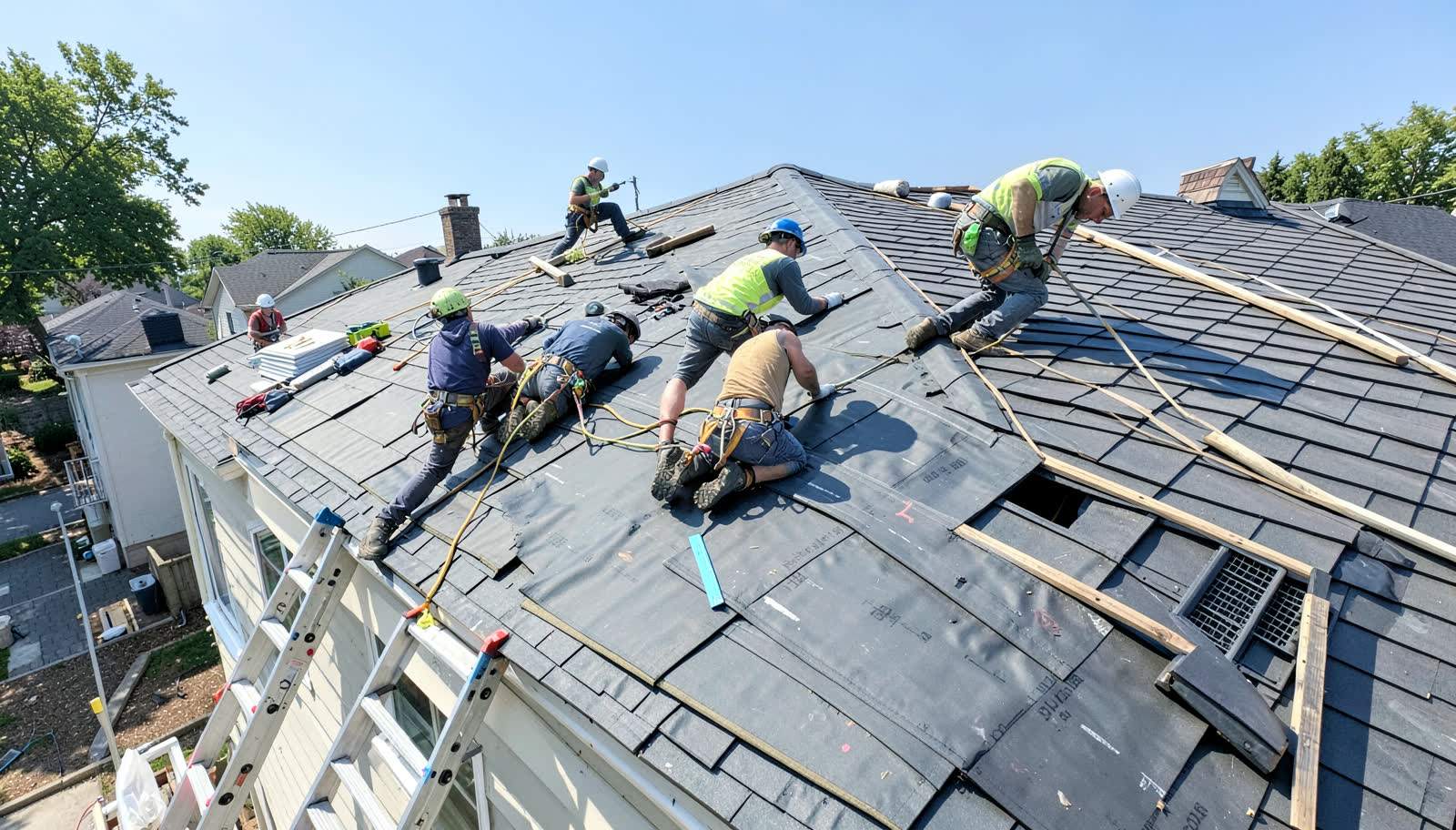
We schedule, install, and clean up like we were never there
Materials staged, landscaping protected, magnet rolled over the whole property for nails. A final walkthrough with you before we call it done.
What's actually up there
A roof is a system, not a stack of shingles.
When one layer is skipped or done cheap, the shingles get blamed years later. This is what goes on, bottom to top.
Decking
The plywood or OSB the whole roof is nailed to. Once the old roof comes off we can finally see it — and any board that's rotted, delaminated, or sagging gets replaced before anything goes over it. Covering bad decking is the single most common shortcut in this trade.
- Inspected after tear-off, with photos
- Damaged sheets replaced, not covered
- Re-nailed to current code where required
Underlayment and leak barriers
The waterproof layer between the deck and the shingles, plus self-adhering ice and water barrier in the valleys and around penetrations — the places where roofs actually leak.
- Valleys, chimneys, skylights, pipe boots
- Eaves and rakes per manufacturer spec
Flashing and edge metal
Drip edge, valley metal, step flashing where the roof meets a wall, and new boots on every pipe. Reusing old, cracked pipe boots to save thirty dollars is why a two-year-old roof leaks.
- New pipe boots, not reused
- Step flashing replaced, not painted over
- Drip edge at eaves and rakes
Shingles and ventilation
Architectural shingles laid in straight courses with the right nail count in the right spot, and a balanced intake-and-exhaust ventilation system so the attic can breathe. Under-ventilated attics cook shingles from underneath and void warranties.
- Nailing pattern to manufacturer spec — this is what keeps the warranty valid
- Intake at the soffit balanced against ridge exhaust
- Ridge cap and final detail work
Free inspection
Want to see what shape your roof is actually in?
We'll walk it, photograph it, and hand you a written assessment. If it doesn't need replacing, we'll say so.
Install day
What the day itself looks like.
Plan on the crew arriving early and the property being a worksite for the day. Here's how we keep that from becoming your problem.
- We'll tell you the day before what time to expect the crew
- Vehicles out of the driveway — we need it for the dump trailer and materials
- Move anything fragile off walls and shelves; tear-off vibrates the whole house
- Cover what's stored in the attic — decades of dust comes loose
- Pets inside, ideally in a back room away from the noise
- Landscaping and AC units get covered and protected before tear-off starts
- Patio furniture and grills moved clear of the roof line
- Kids and cars kept off the driveway while material is being loaded
- A magnet is rolled over the yard, driveway, and street for nails at the end
- A final walkthrough with you before we call it finished
Rain in the forecast? We don't tear off more roof than we can dry-in the same day. If weather turns mid-job, the open section gets covered before anyone leaves.
Questions
What people ask before install day.
How long does a roof replacement take?
Most single-family homes are a one-day tear-off and install, with larger or steeper roofs running into a second day. Weather, roof complexity, and how much decking needs replacing are the variables.
Do I need to be home?
No, though we do like to walk the roof with you at the start and at the end if you can be. Everything else can be handled by phone.
Will you damage my landscaping?
We cover shrubs and AC units and stage material off the beds. Roofing is messy work and honest contractors admit that — but the plan is that you can't tell we were there once we've cleaned up.
What happens to all the nails?
A rolling magnet goes over the driveway, yard, and street at the end of the job, and again on a final pass. If you find one afterward, call us — we'll come back out.
What if it rains in the middle of my roof?
We only open what we can dry-in the same day. If weather moves in early, the crew stops tear-off and gets the exposed deck covered before anyone leaves the property.
Do you use subcontractors?
Worth asking any roofer — and worth asking who carries workers' comp on the people physically on your roof. Ask us on the inspection and we'll tell you exactly who'll be doing your job.
Free quote
Start with an inspection.
No obligation, no pressure, and a real answer about your roof.